They Found A Cave
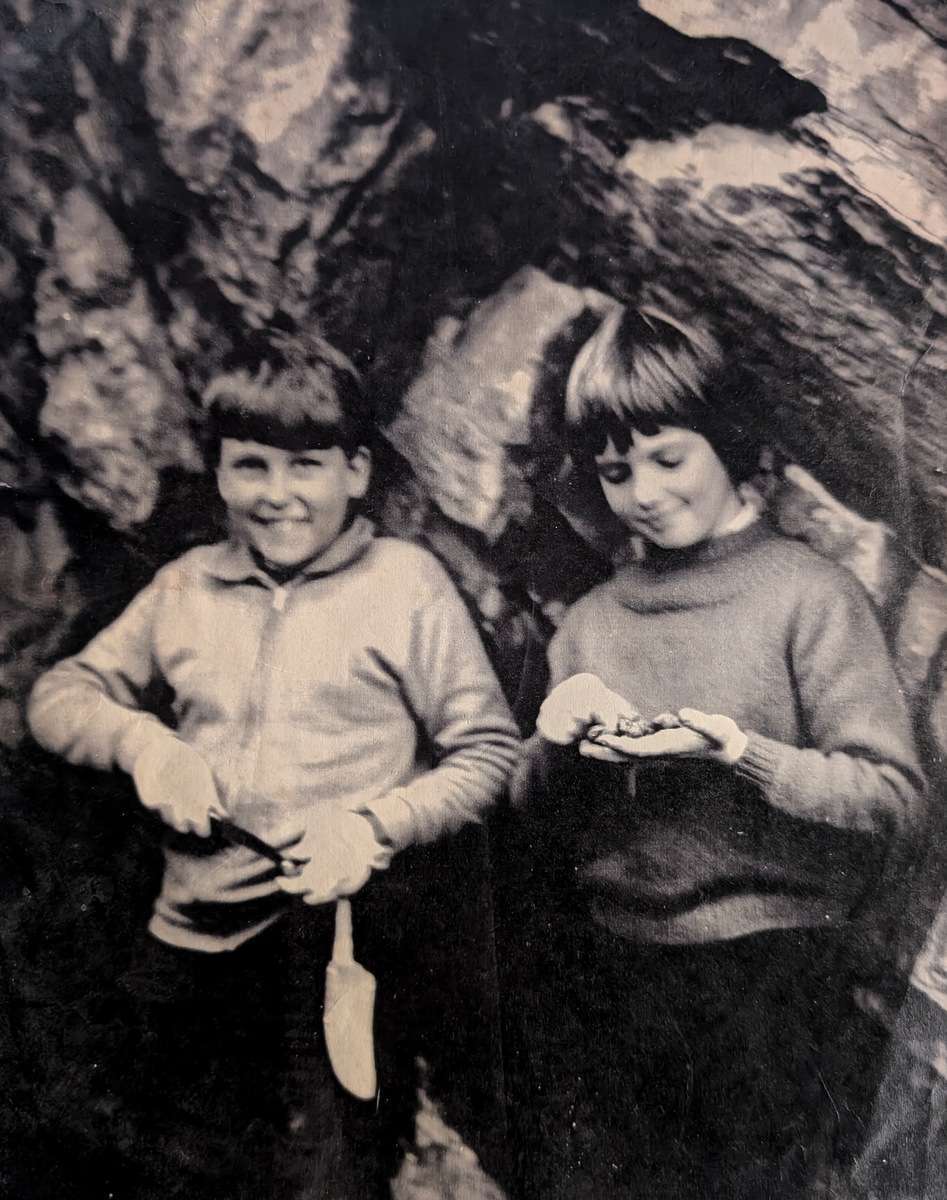
When I was at Burnie High School, my parents were part of the Burnie Field Naturalists Club, which had a shack at pinmatik/Rocky Cape.
We spent many weekends there with the club. We were close to my cousins Dooley and Joanne, and while the older Field Naturalists did their thing, we often went exploring.
Back then, we had a lot of freedom and a large area to explore, which was fantastic.
There were two big well-known Aboriginal caves at Rocky Cape. One day, while exploring near the South cave, we found a small dark hole in the side of a hill. Curious about what was inside, my sister Rees held my ankles while I crawled in with a torch.
The small hole opened up into a large cavern, with bones, shells and aboriginal implements strewn on the floor.
We ran back and told our parents and the Field Nats, who realised we may have been the first white people to see the cave.
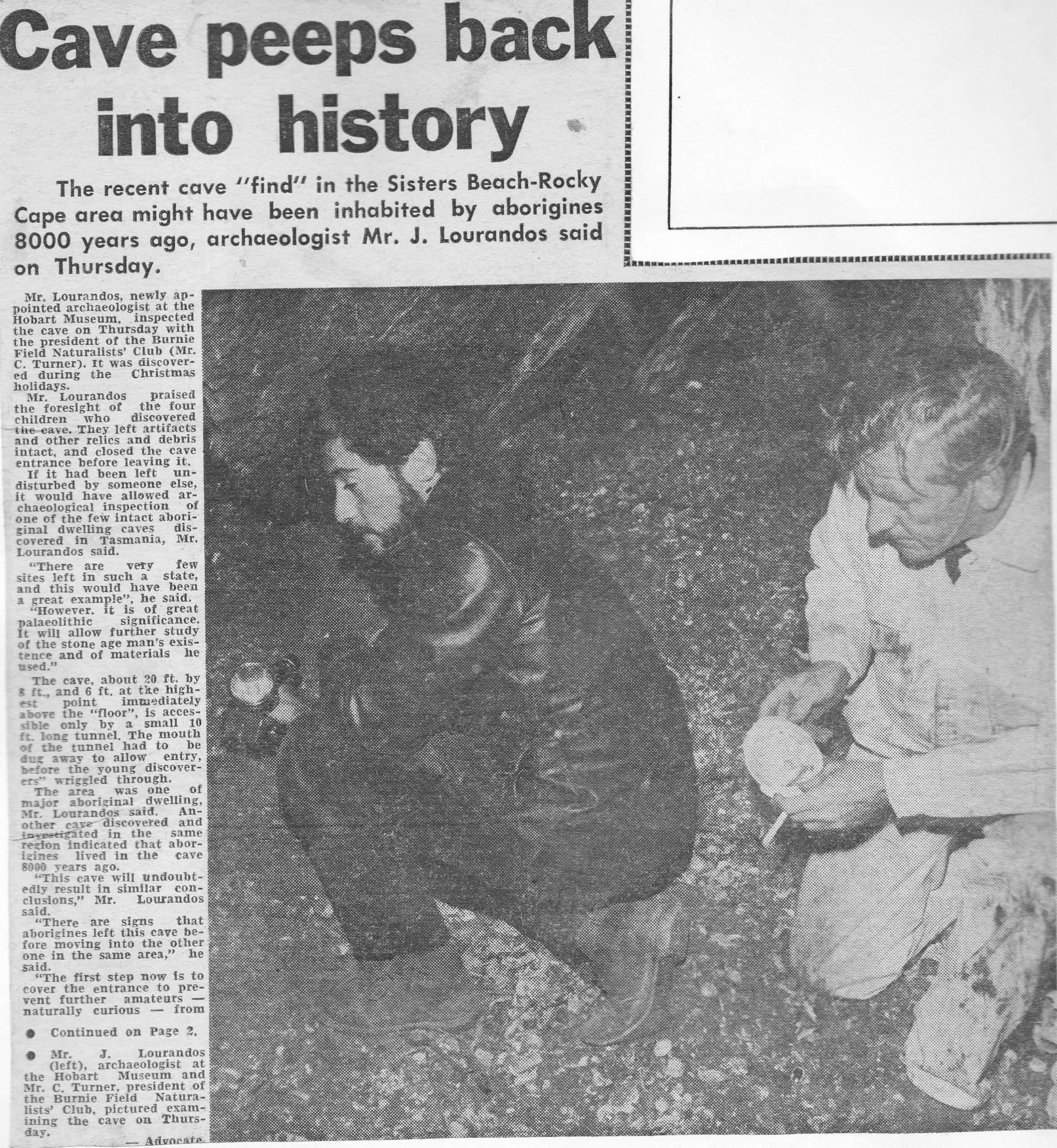
As shown in the newspaper clippings below, the news hit the papers, and archaeologists came to see the cave.
It was an exciting time, though I don’t remember poking my head into the cave and I don’t remember that first view.
It would have been an awe-inspiring experience if only I could remember it.
Mr Rhys Jones, senior tutor in anthropology at the University of Sydney said afterwards that the surface of the cave had not been disturbed for hundreds of years.
“We can find from the shells, bones and charcoal what the Aborigines’ diet was, what they used for wood, and what kind of animals they killed,” he added.
“The most important fact of the discovery is that the cave has been undisturbed and we can reconstruct, through plans and photographs, the cave as it was.
“So far the discovery that the cave was dwelt in about 8000 years ago has given us an idea of when the Aborigines moved from the Strait area to higher land, when the Strait sank.
“This was about the time of the closing stages of the ice age.”
“Much to do”
Mr Jones continued: “We think that the Aborigines slowly built up the floor of the chamber with waste food, like shells, bones and charcoal.
“After years of this, the area within the cave became small and the Aborigines moved into the larger cave and slowly the entrance was completely blocked.
“This is why the cave is undisturbed.”
“We have discovered that the main cave was inhabited up to 300 years ago, but we still have much work to do.”
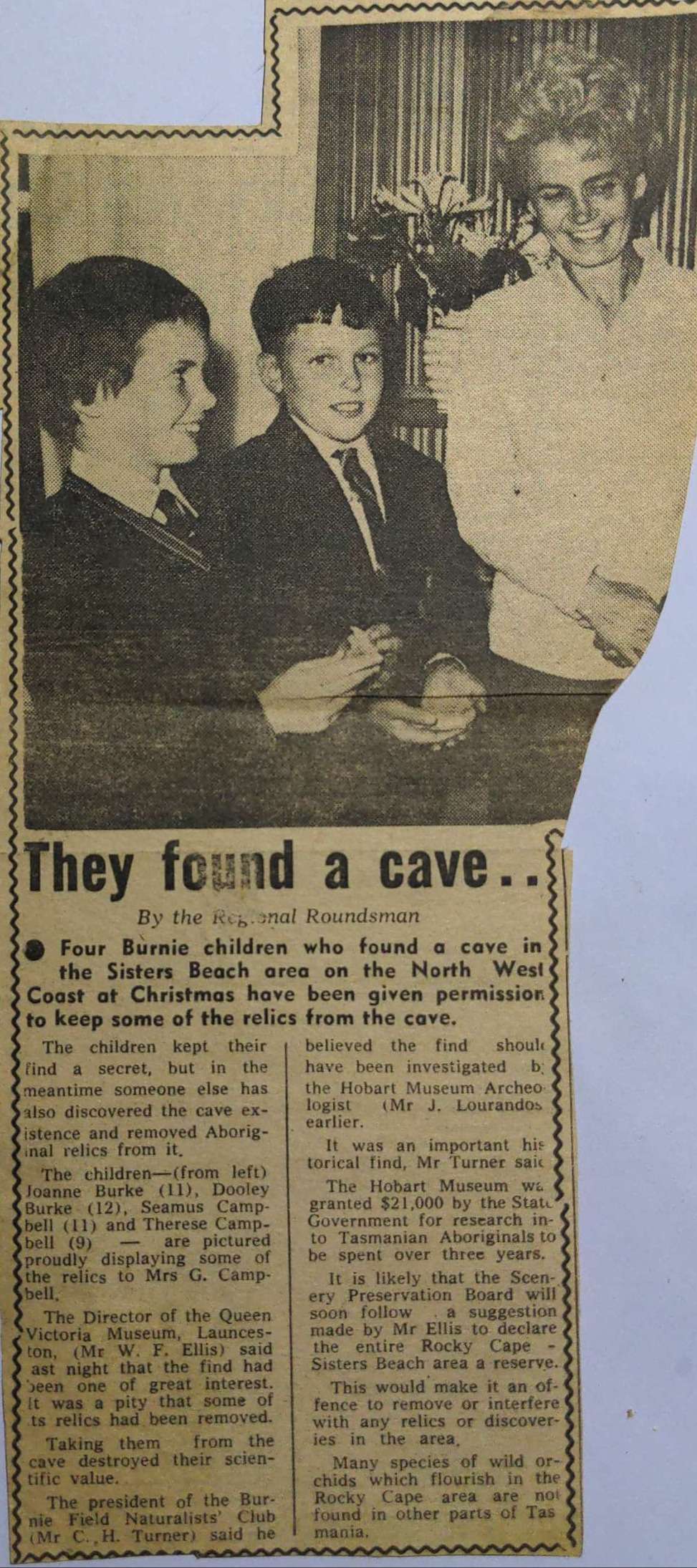
They found a cave..
By the Regional Roundsman
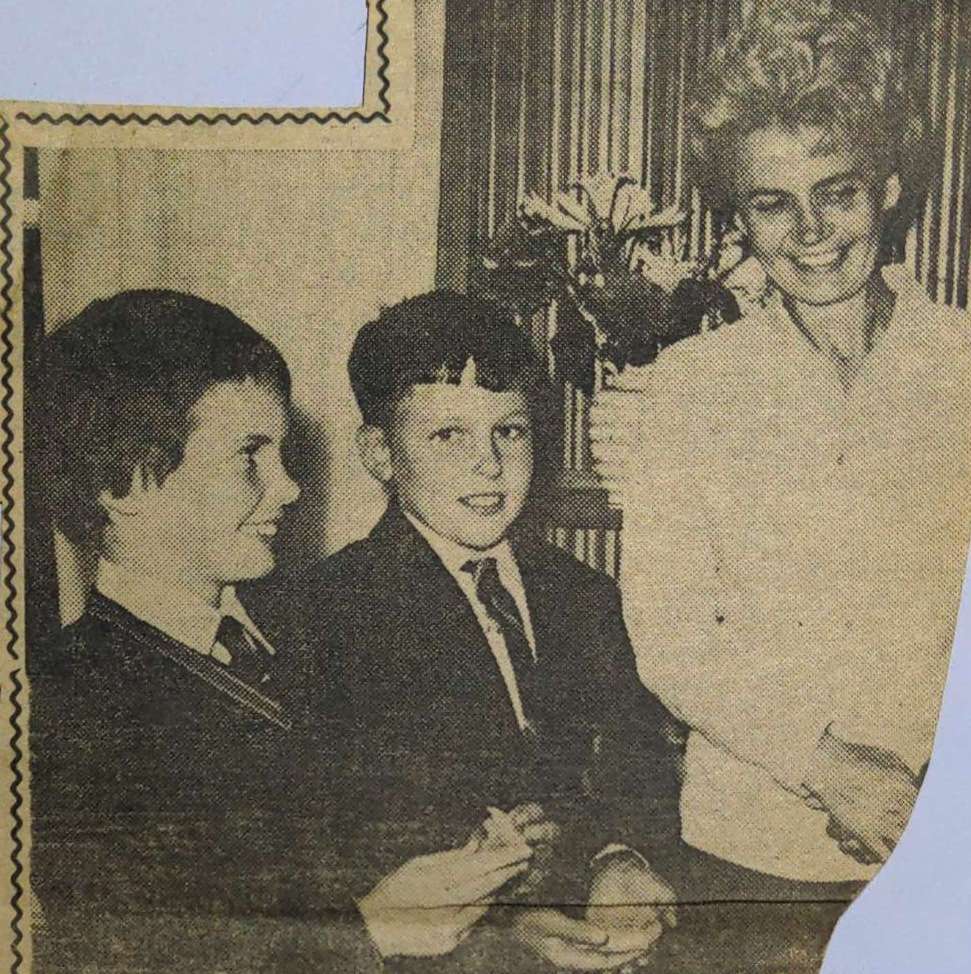
Four Burnie children who found a cave in the Sisters Beach area on the North West Coast at Christmas have been given permission to keep some of the relics from the cave.
The children kept their find a secret, but in the meantime someone else has also discovered the cave existence and removed Aboriginal relics from it.
The children—(from left) Joanne Burke (11), Dooley Burke (12), Seamus Campbell (11) and Therese Campbell (9) are pictured proudly displaying some of the relics to Mrs G. Campbell.
The Director of the Queen Victoria Museum, Launceston, (Mr W. F. Ellis) said last night that the find had been one of great interest. It was a pity that some of its relics had been removed.
Taking them from the cave destroyed their scientific value.
The president of the Burnie Field Naturalists’ Club (Mr C. H. Turner) said he believed the find should have been investigated by the Hobart Museum Archeologist (Mr J. Lourandos) earlier.
It was an important historical find, Mr Turner said.
The Hobart Museum was granted $21,000 by the State Government for research into Tasmanian Aboriginals to be spent over three years.
It is likely that the Scenery Preservation Board will soon follow a suggestion made by Mr Ellis to declare the entire Rocky Cape – Sisters Beach area a reserve.
This would make it an offence to remove or interfere with any relics or discoveries in the area.
Many species of wild orchids which flourish in the Rocky Cape area are not found in other parts of Tasmania.
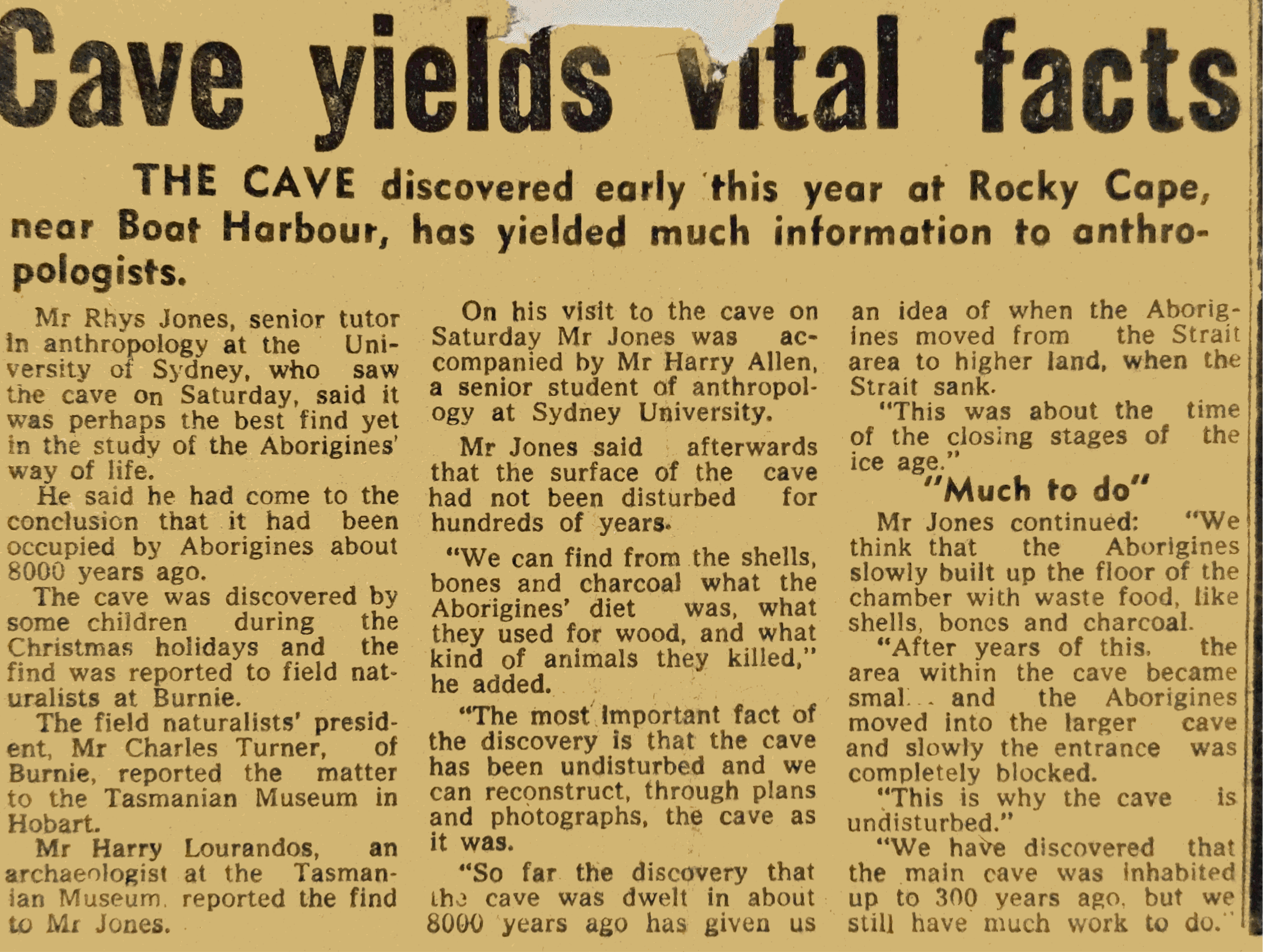
Cave yields vital facts
THE CAVE discovered early this year at Rocky Cape, near Boat Harbour, has yielded much information to anthropologists.
Mr Rhys Jones, senior tutor in anthropology at the University of Sydney, who saw the cave on Saturday, said it was perhaps the best find yet in the study of the Aborigines’ way of life.
He said he had come to the conclusion that it had been occupied by Aborigines about 8000 years ago.
The cave was discovered by some children during the Christmas holidays and the find was reported to field naturalists at Burnie.
The field naturalists’ president, Mr Charles Turner, of Burnie, reported the matter to the Tasmanian Museum in Hobart.
Mr Harry Lourandos, an archaeologist at the Tasmanian Museum, reported the find to Mr Jones.
On his visit to the cave on Saturday Mr Jones was accompanied by Mr Harry Allen, a senior student of anthropology at Sydney University.
Mr Jones said afterwards that the surface of the cave had not been disturbed for hundreds of years.
“We can find from the shells, bones and charcoal what the Aborigines’ diet was, what they used for wood, and what kind of animals they killed,” he added.
“The most important fact of the discovery is that the cave has been undisturbed and we can reconstruct, through plans and photographs, the cave as it was.
“So far the discovery that the cave was dwelt in about 8000 years ago has given us an idea of when the Aborigines moved from the Strait area to higher land, when the Strait sank.
“This was about the time of the closing stages of the ice age.”
“Much to do”
Mr Jones continued: “We think that the Aborigines slowly built up the floor of the chamber with waste food, like shells, bones and charcoal.
“After years of this, the area within the cave became small and the Aborigines moved into the larger cave and slowly the entrance was completely blocked.
“This is why the cave is undisturbed.”
“We have discovered that the main cave was inhabited up to 300 years ago, but we still have much work to do.”